Measured on the person
Chest around the fullest part, waist, hips, height, inseam — taken with a soft tape on the body. Use these to choose a size and to describe who the garment is for.
How to measure a garment, the difference between body and garment sizes, how grading works across youth, women’s and men’s, and a builder for your size run.
02Measurement hotspots
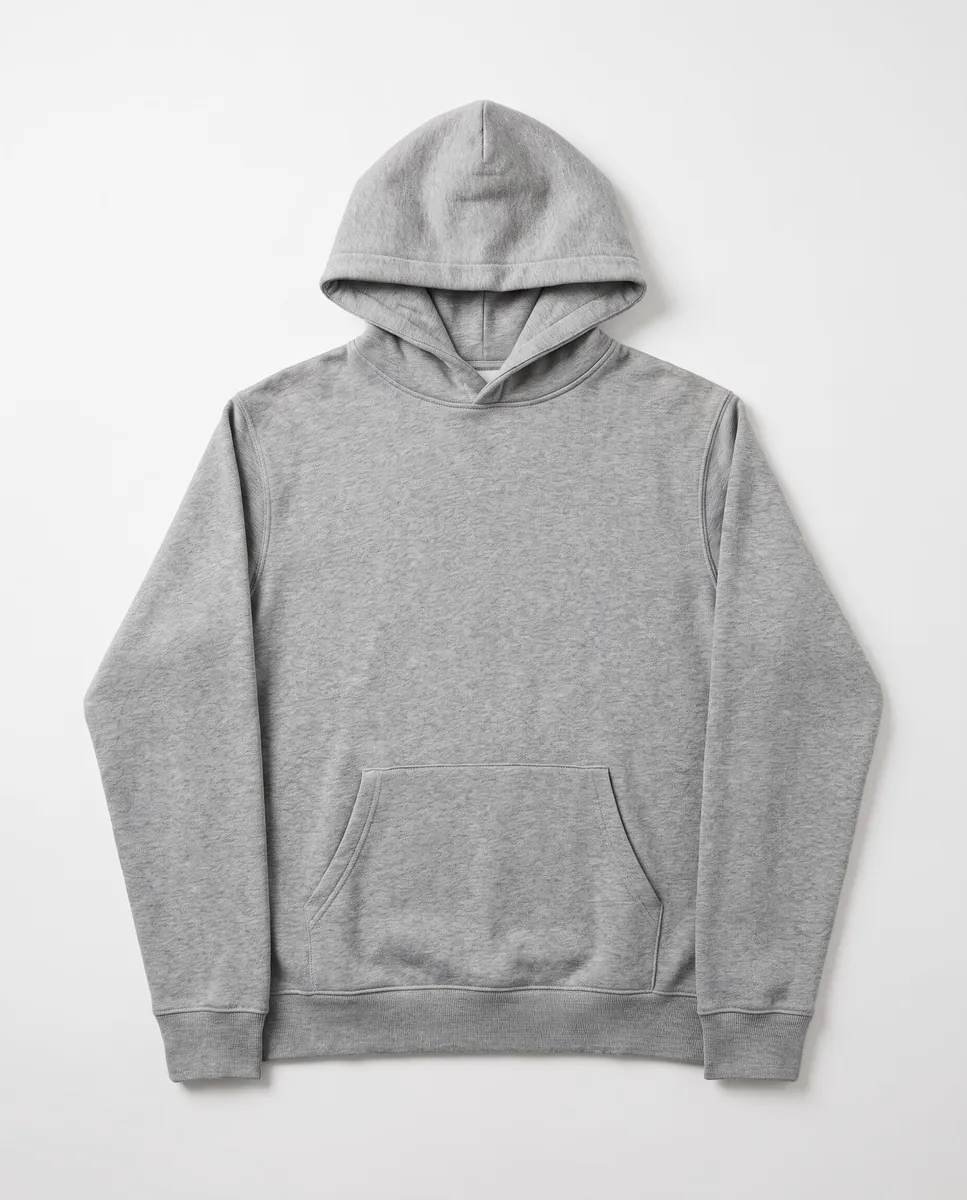
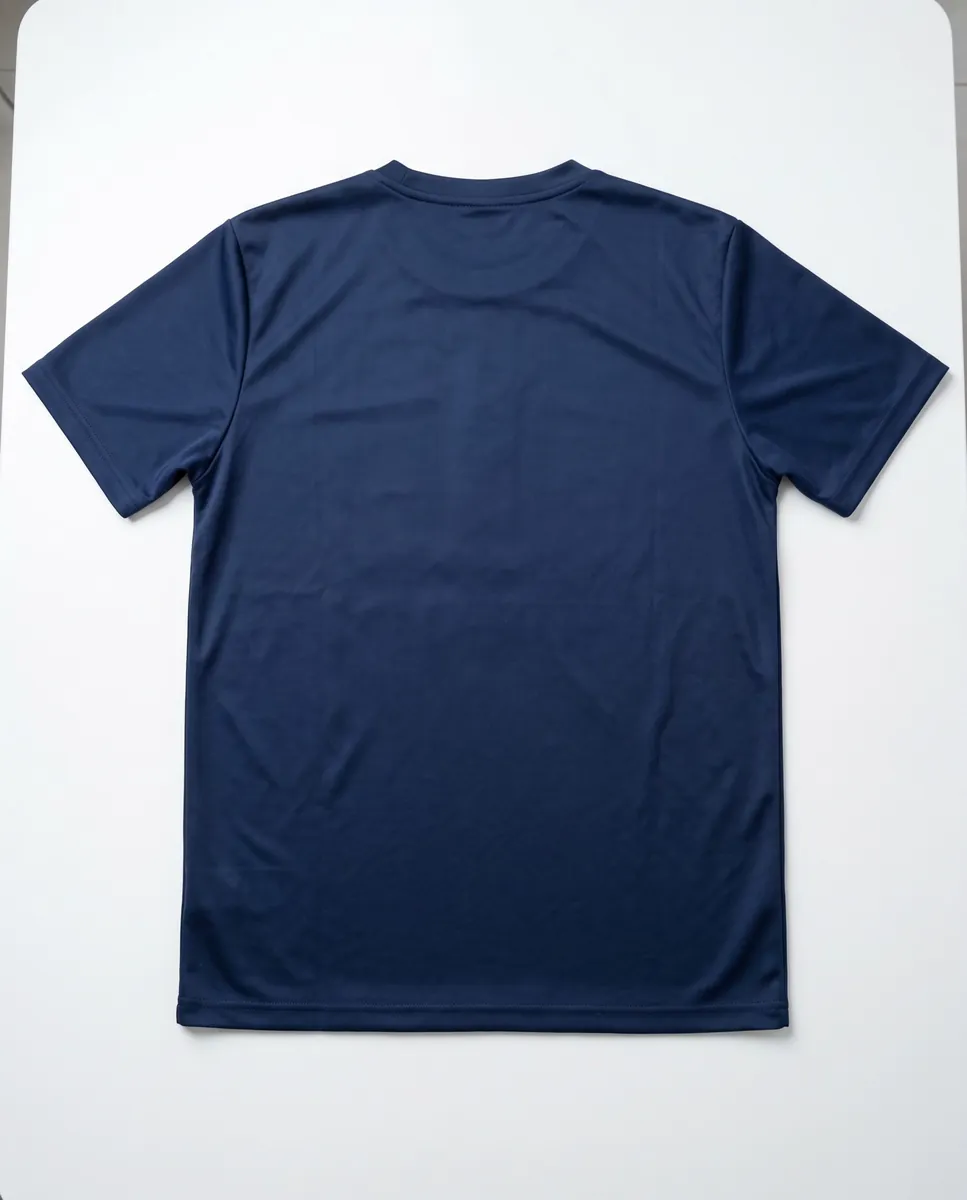
Every number on a spec sheet is a line on a flat garment. Pick a garment, tap a numbered point and see exactly where the tape goes. Switch cm and inches any time.
Lay the garment flat and smooth. Measure straight across, about 2.5 cm below the armholes, from side seam to side seam. Double it for the full chest.
Example · size M58 cmIndicative only — not our size chart
03Body vs garment
Two kinds of measurement get mixed up in almost every first brief. Knowing which is which saves a sample round.
Chest around the fullest part, waist, hips, height, inseam — taken with a soft tape on the body. Use these to choose a size and to describe who the garment is for.
½ chest, body length, sleeve, hem — taken flat on a finished piece. This is what the factory makes, grades and checks. Your spec sheet should be written in these.
Ease = garment − body · example
+8 cm of ease for a regular fit · example values, not a standard
04Reading a spec sheet
This is how a graded spec looks. The numbers are an example only — illustrative values to show the format, not Onyx Stitch’s size chart. Your chart is agreed per style.
| Hoodie · example | S | M | L | XL | 2XL | Tolerance |
|---|---|---|---|---|---|---|
| ½ Chest | 55 | 58 | 61 | 64 | 67 | Agreed per style |
| Body length | 70 | 72 | 74 | 76 | 78 | Agreed per style |
| Shoulder | 52 | 54 | 56 | 58 | 60 | Agreed per style |
| Sleeve length | 62 | 63 | 64 | 65 | 66 | Agreed per style |
| Hem width | 47 | 50 | 53 | 56 | 59 | Agreed per style |
| Hood height | 34 | 35 | 36 | 37 | 38 | Agreed per style |
| Cuff width | 9.5 | 10 | 10.5 | 11 | 11.5 | Agreed per style |
| Jersey · example | S | M | L | XL | 2XL | Tolerance |
|---|---|---|---|---|---|---|
| ½ Chest | 50 | 53 | 56 | 59 | 62 | Agreed per style |
| Body length | 72 | 74 | 76 | 78 | 80 | Agreed per style |
| Shoulder | 44 | 46 | 48 | 50 | 52 | Agreed per style |
| Sleeve length | 20 | 21 | 22 | 23 | 24 | Agreed per style |
| Hem width | 51 | 54 | 57 | 60 | 63 | Agreed per style |
| Neck width | 18.5 | 19 | 19.5 | 20 | 20.5 | Agreed per style |
| Sleeve opening | 17 | 18 | 19 | 20 | 21 | Agreed per style |
Garment measurements, laid flat. Grade per size shown for illustration; real grade rules and tolerances are agreed per style.
05Size-run builder
Pick a garment and a size set, then enter quantities. The ticket totals the run and drops it into your brief. Minimums are set per style and confirmed in your quote.
Garment measurements per your agreed spec
Minimum order: per style — confirmed in your quote
Added to brief06Grading
Grading scales the approved sample to every size using grade rules. Size ranges shown are common examples; yours are listed in the brief and agreed per style.
Proportions change, not just size: shorter bodies and sleeves relative to chest, smaller neck openings. Graded from a youth sample size.
Shaped through the waist and hip, narrower shoulders, adjusted armholes and lengths. A women’s fit is its own pattern, not a small men’s.
Straighter body, broader shoulders, longer sleeves. Usually graded from an M sample size.
One straight pattern for everyone, common in streetwear and merch. Many brands offer it alongside a women’s fit.
Size ranges are examples. Extended sizes can be discussed in your brief.
07Sending your size chart
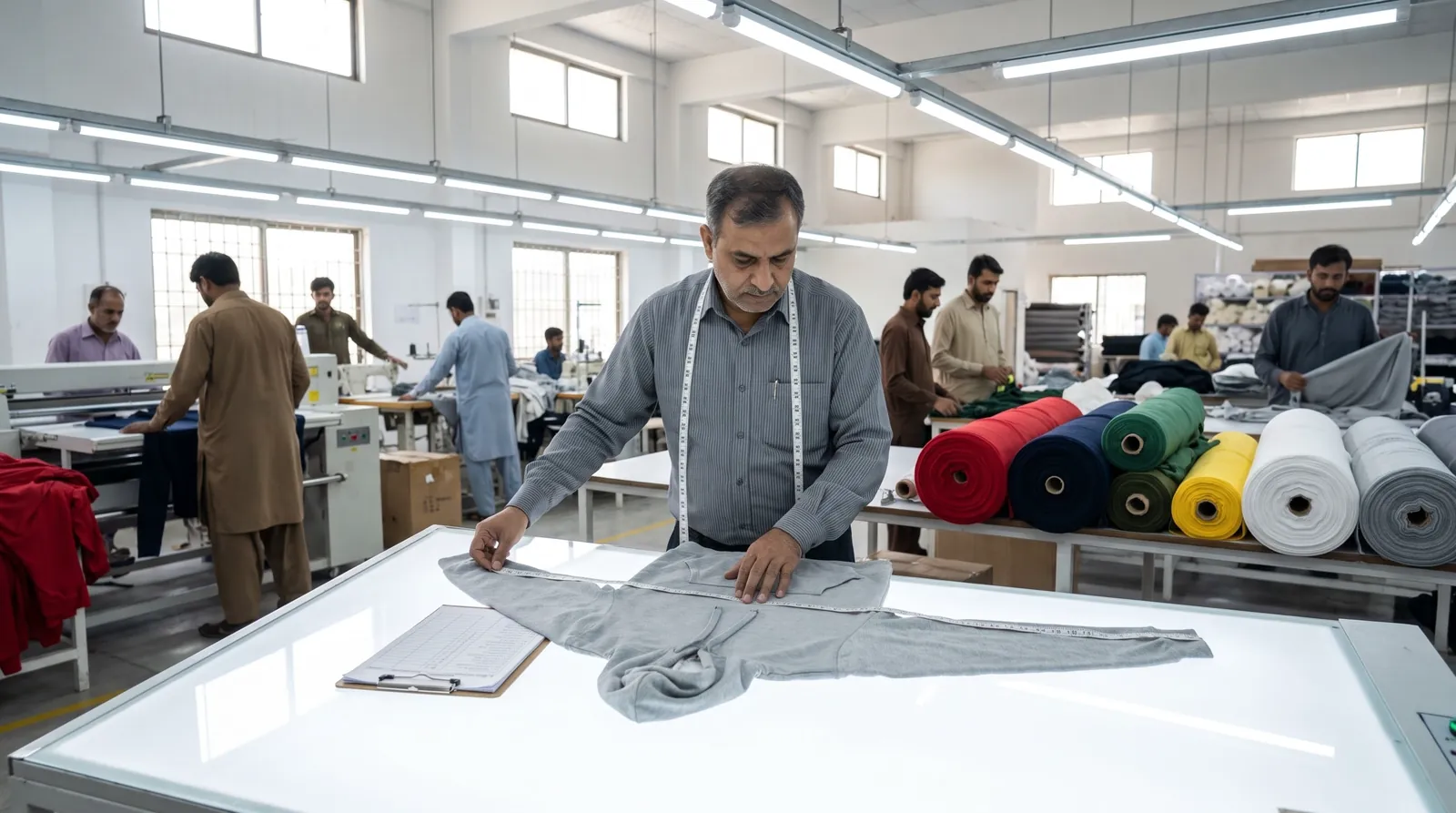
Measure three pieces of your reference garment and use the average — single garments vary.
Smooth the garment on a table, buttons and zips closed, and measure relaxed.
Use the names on this page (½ chest, body length from HPS…) so everyone measures the same line.
Sizes across the top, points down the side, in one unit. Add a photo showing each point.
Slim, regular, relaxed or oversized — and who wears it. Numbers plus intent beat numbers alone.
Otherwise they are proposed per point and agreed per style.
08Before you enquire
Straight answers. Anything commercial — minimums, timing, prices — is set per style and confirmed in your quote.
Size charts are agreed per style. You can send your own chart, a reference garment to match, or ask us to develop one for your market; it is confirmed on the sample before production.
Garment measurements — taken flat on a finished garment — are what the factory makes and checks. Body measurements help you choose sizes and define fit, and the difference between them is the ease.
Grading scales a pattern from the sample size to every other size using grade rules — how much each measurement changes per size. Youth, women’s and men’s fits use different rules, not just smaller or larger versions.
Tolerances (how far a finished measurement may vary from the spec) are agreed per style and measurement point, and written into the spec sheet for quality checks.
Yes. Send the garment or its measurements; the pattern is made to match and you approve the fit on a sample.
Start from your sales history or your squad list. Our size-run builder on this page totals quantities per size; minimums are set per style and confirmed in your quote.
Youth, women’s, men’s and extended sizes can be graded from the same design. List every size you need in the brief.
09Your brief
Tell us what you are making. A tech pack, a reference photo or a sketch on a napkin all work. We reply with questions, the route that fits (OEM or ODM), sampling steps and a quote.
→Plan the next step
Send your size chart or a reference garment and your size run. We reply with questions, a sampling plan and a quote.