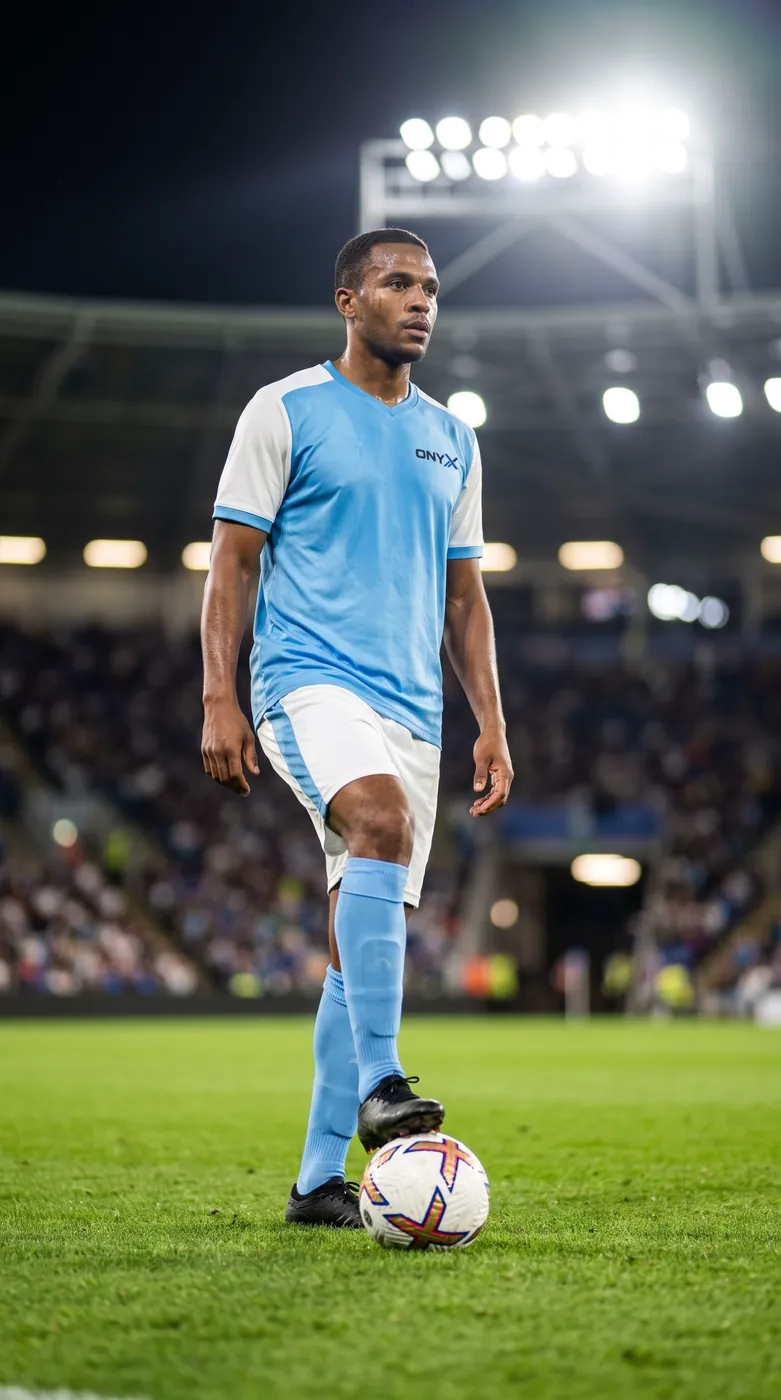
Placed to the centimetre.
Logo placement, decoration method, labels and packaging — chosen with you, sized in centimetres and confirmed on the sample before your run.
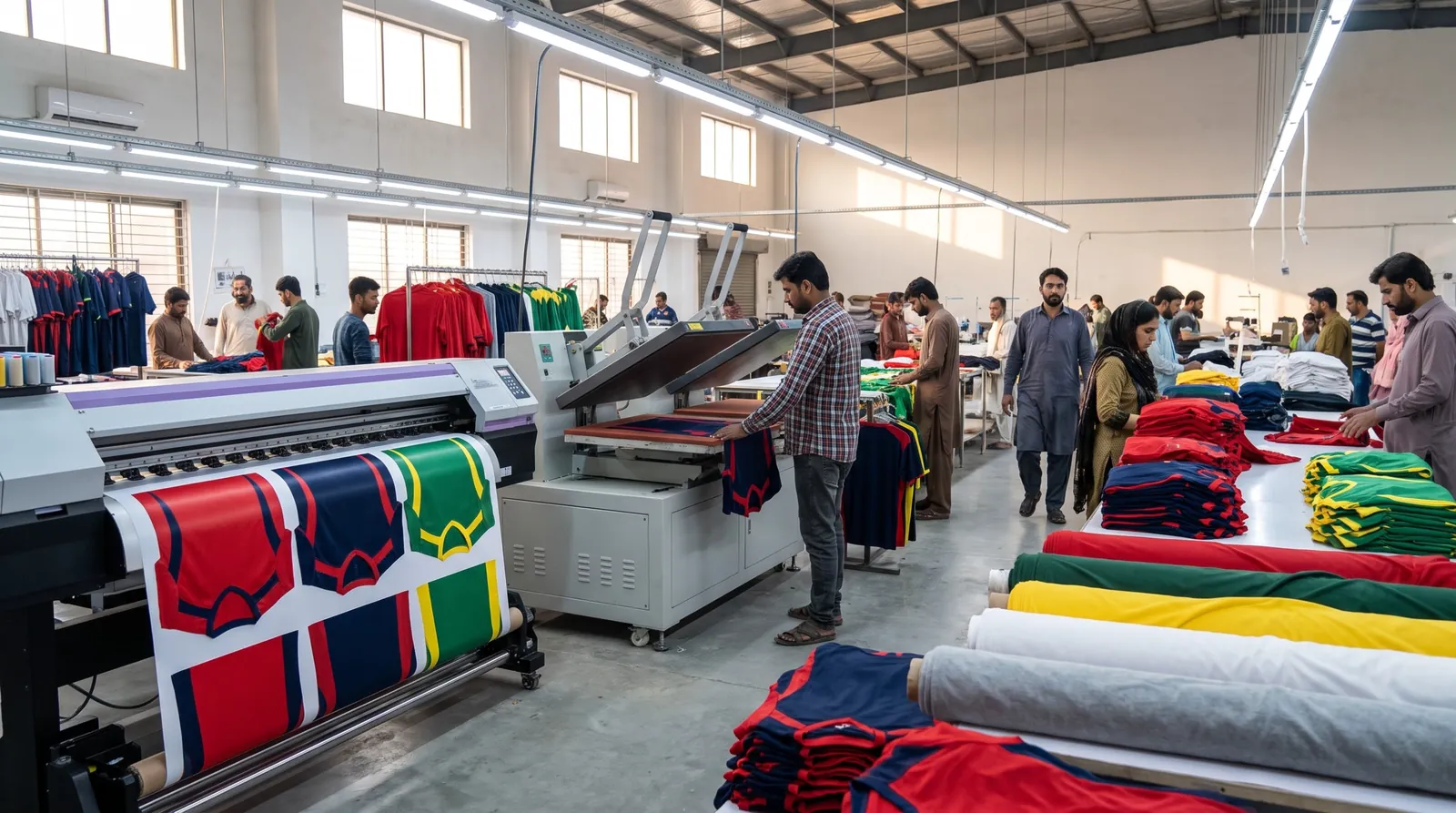
- Methods
- 6Embroidery, prints, sublimation, patches
- Placements
- 8 + customChest, sleeves, nape, back
- Labels & packaging
- YoursWoven, printed, tags, bags
- Confirmed
- On the sampleBefore production
02Placement studio
Drag it. Size it. Brief it.
Switch placements on, drag the marks where you want them and set the width in centimetres. Pick a method to preview its finish. The result drops into your brief as a placement note.
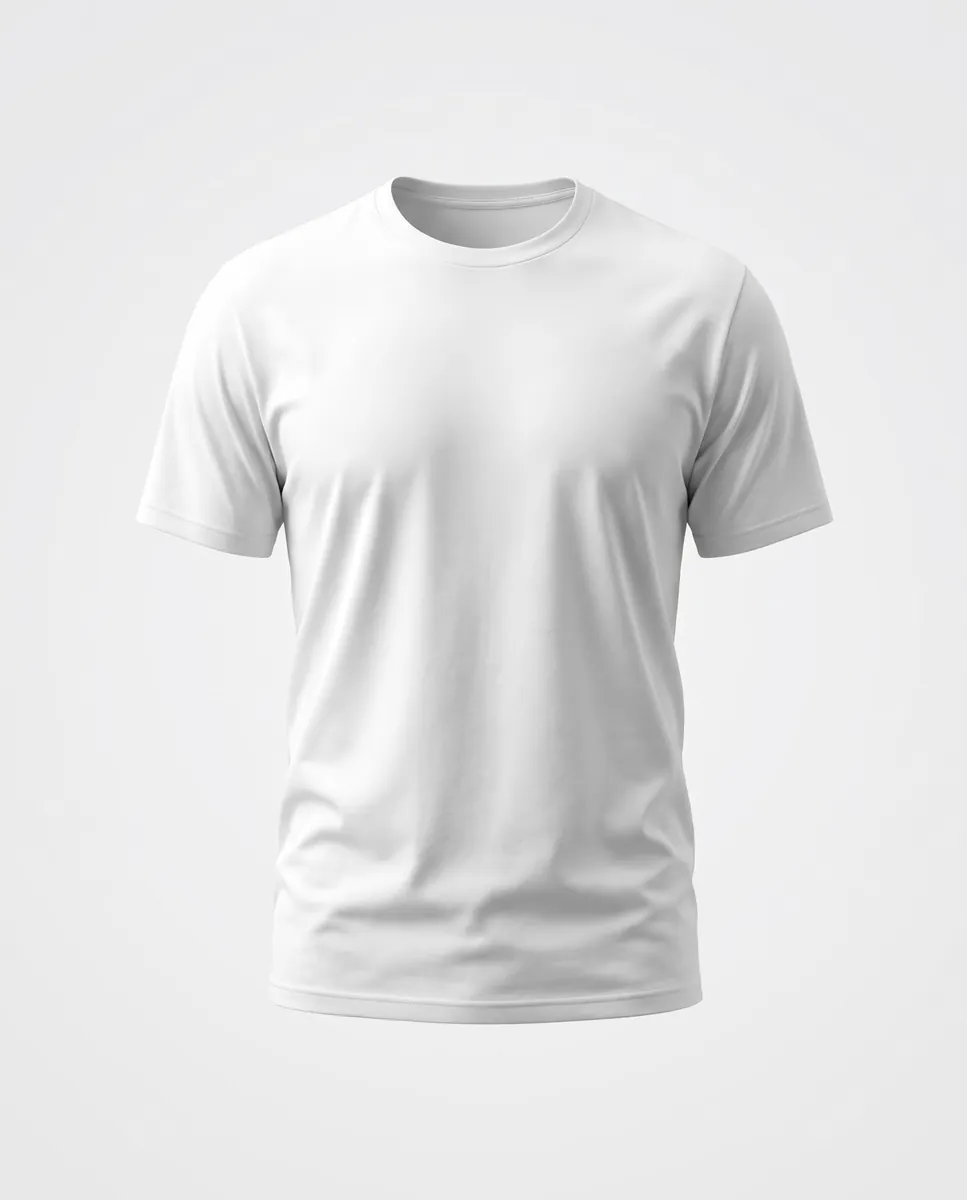
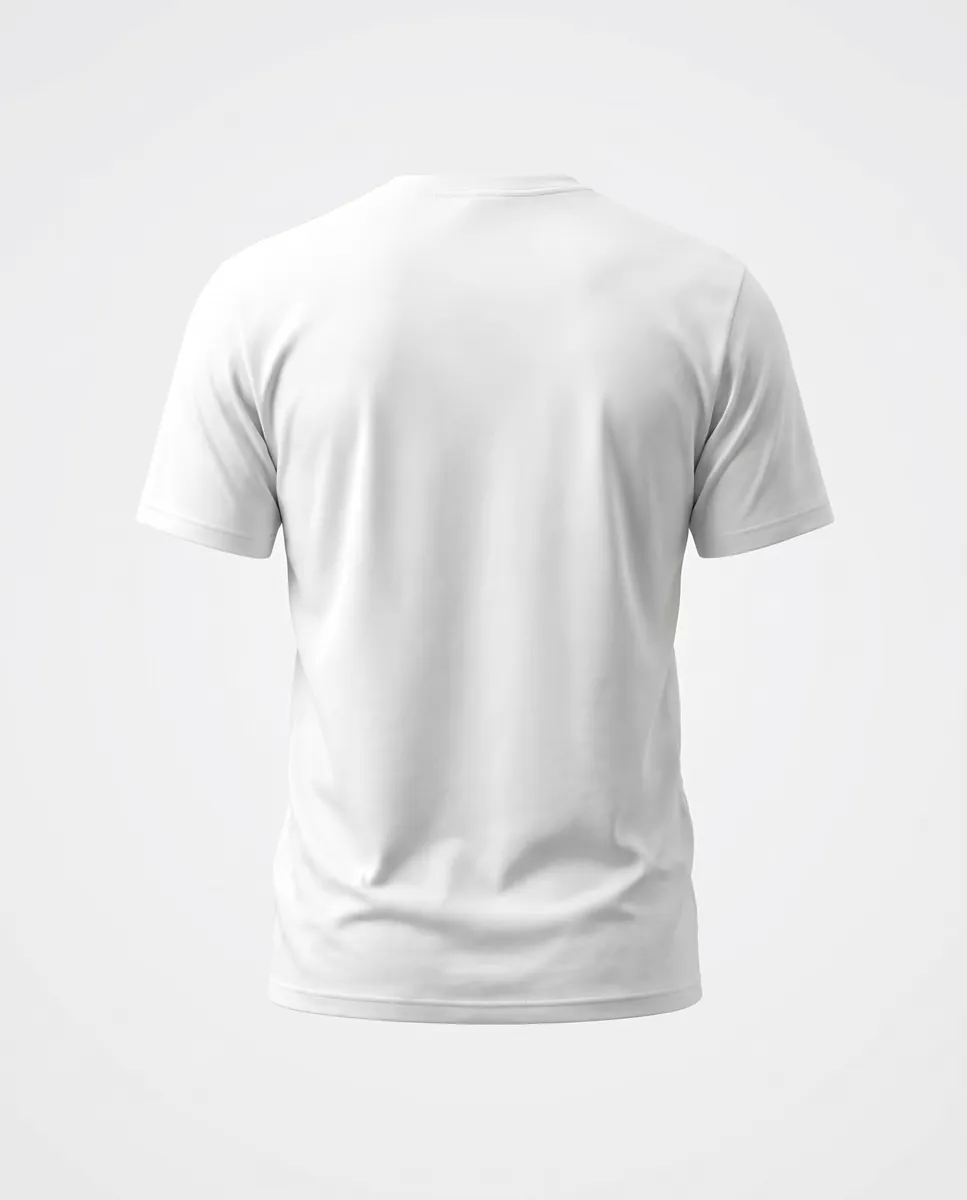 Back photo in production · front shown as stand-in
- Left chest9 cm · Embroidery
Sizes are a guide. Method and size are confirmed against your fabric and artwork on the sample.
03Method switcher
One logo, six finishes.
The same mark on the same white knit, finished six ways. Each switch cuts across at the brand angle so you compare like with like.
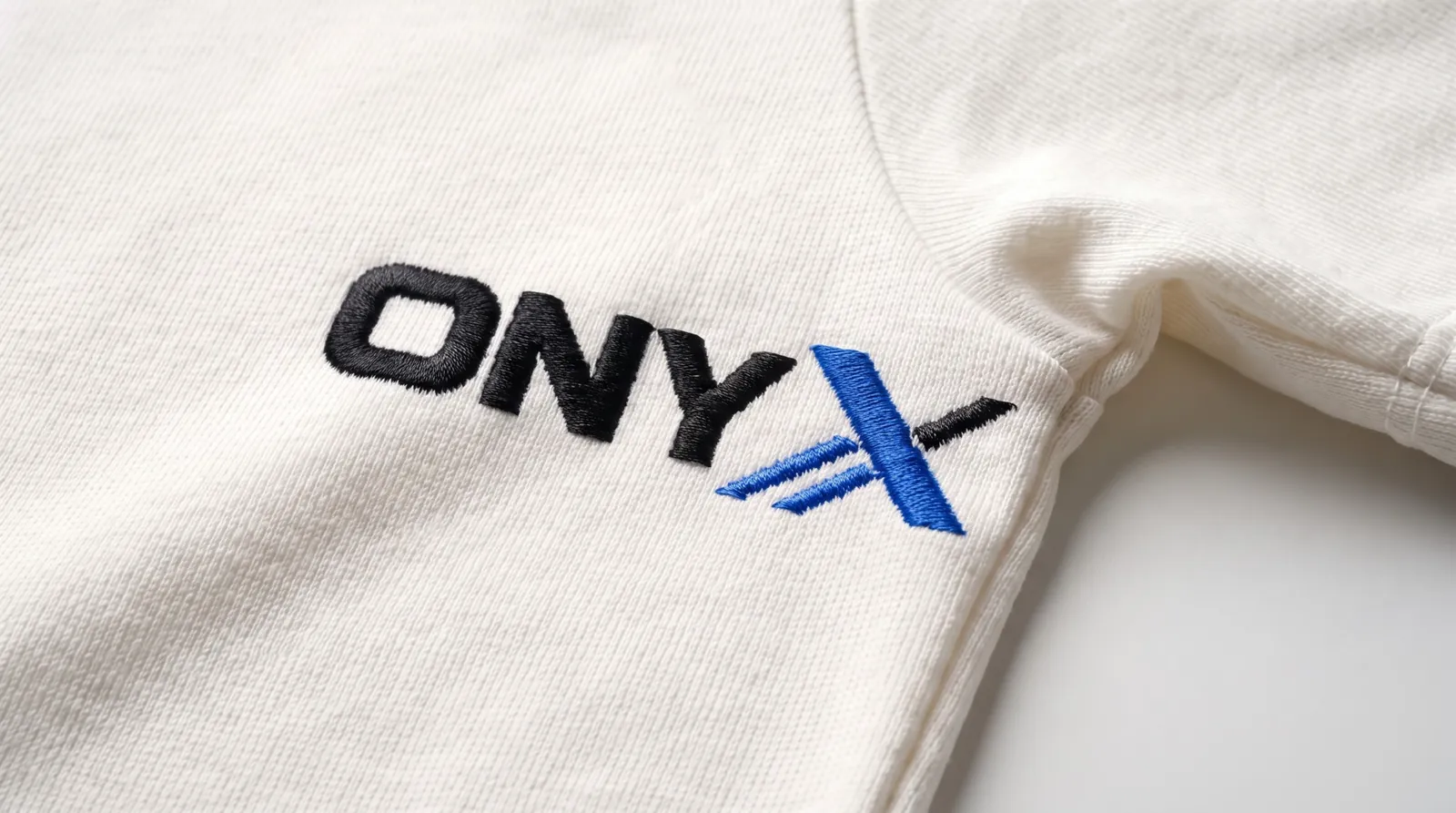 Close-up in production
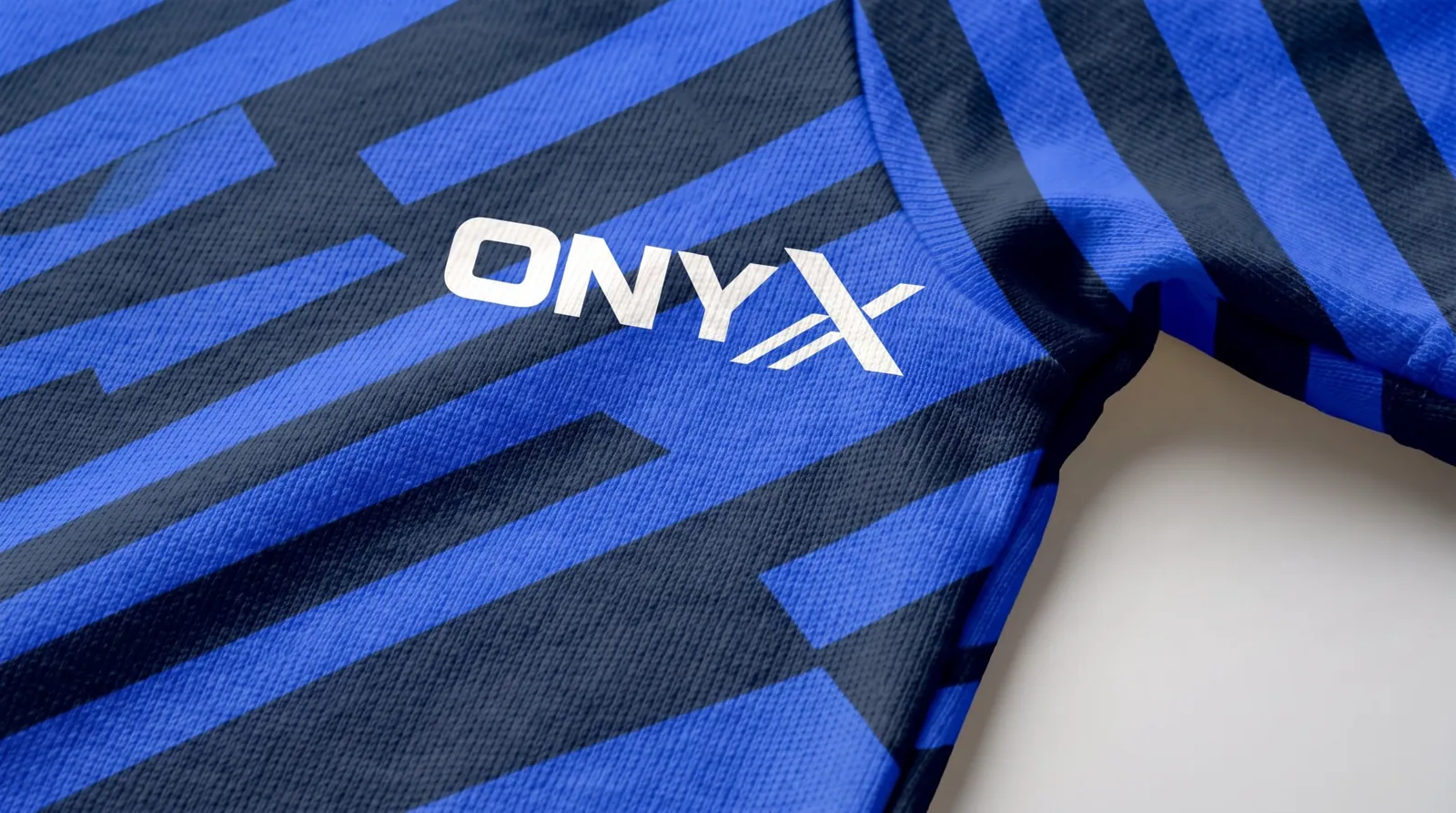 Close-up in production
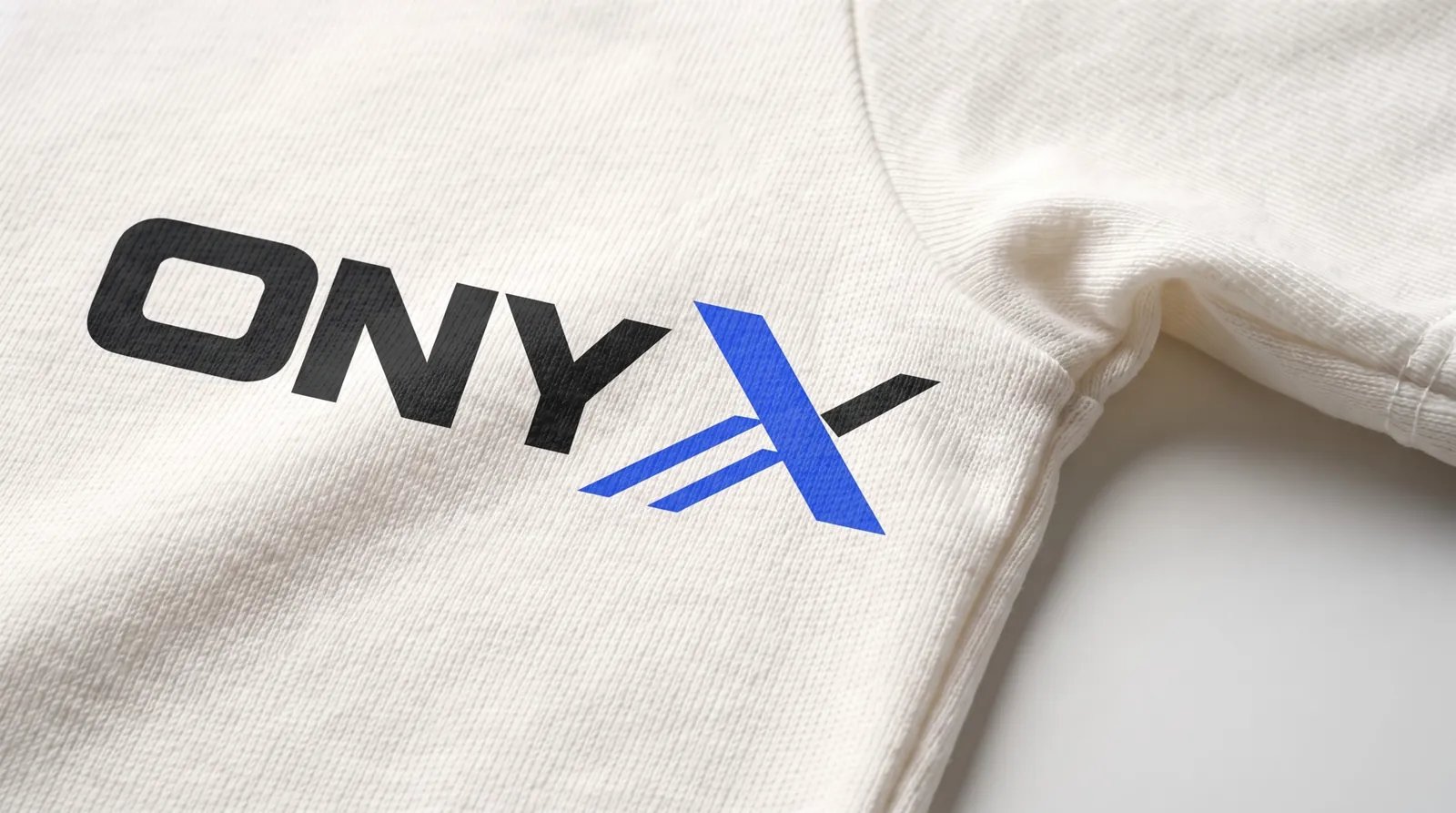 Close-up in production
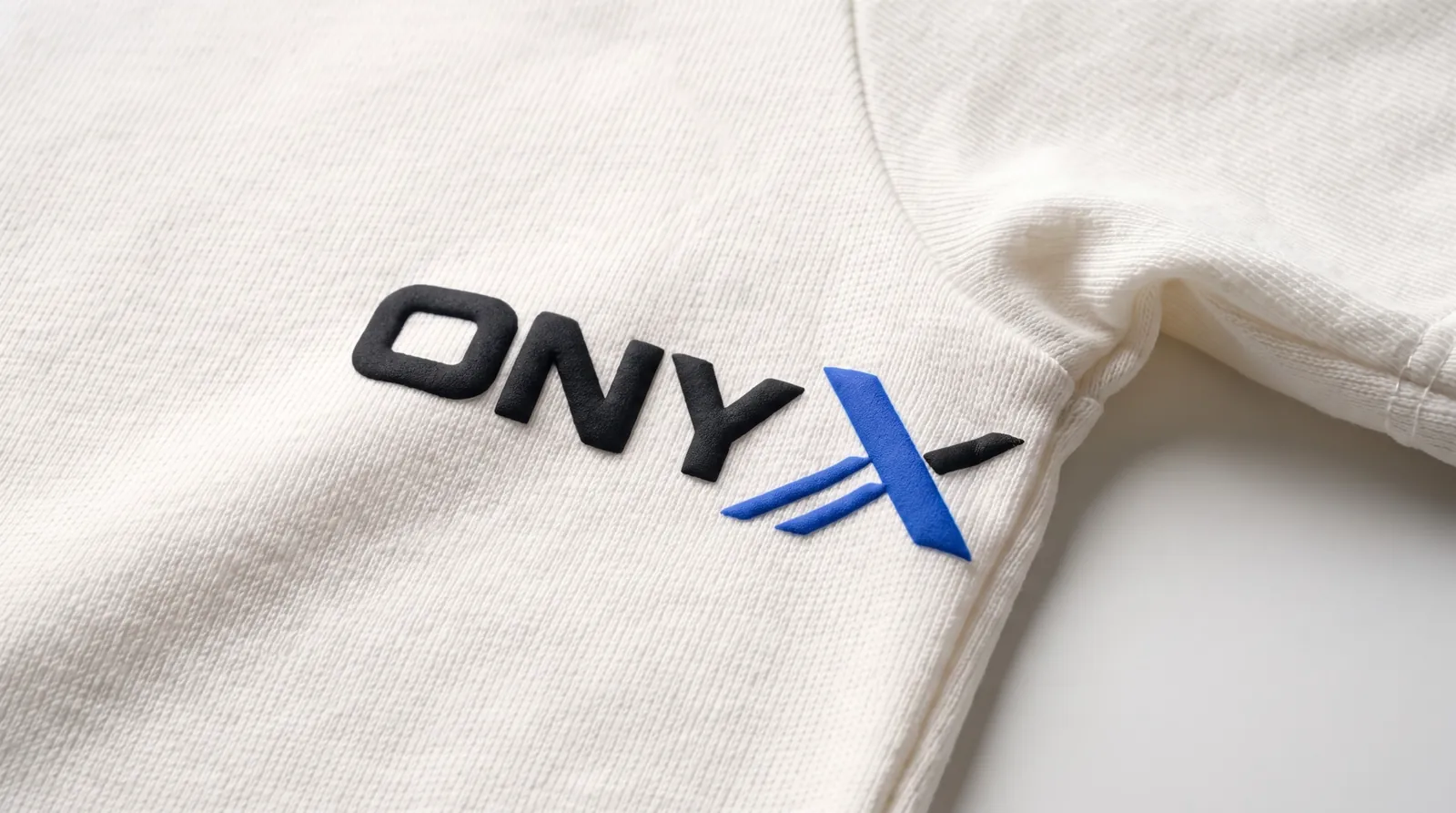 Close-up in production
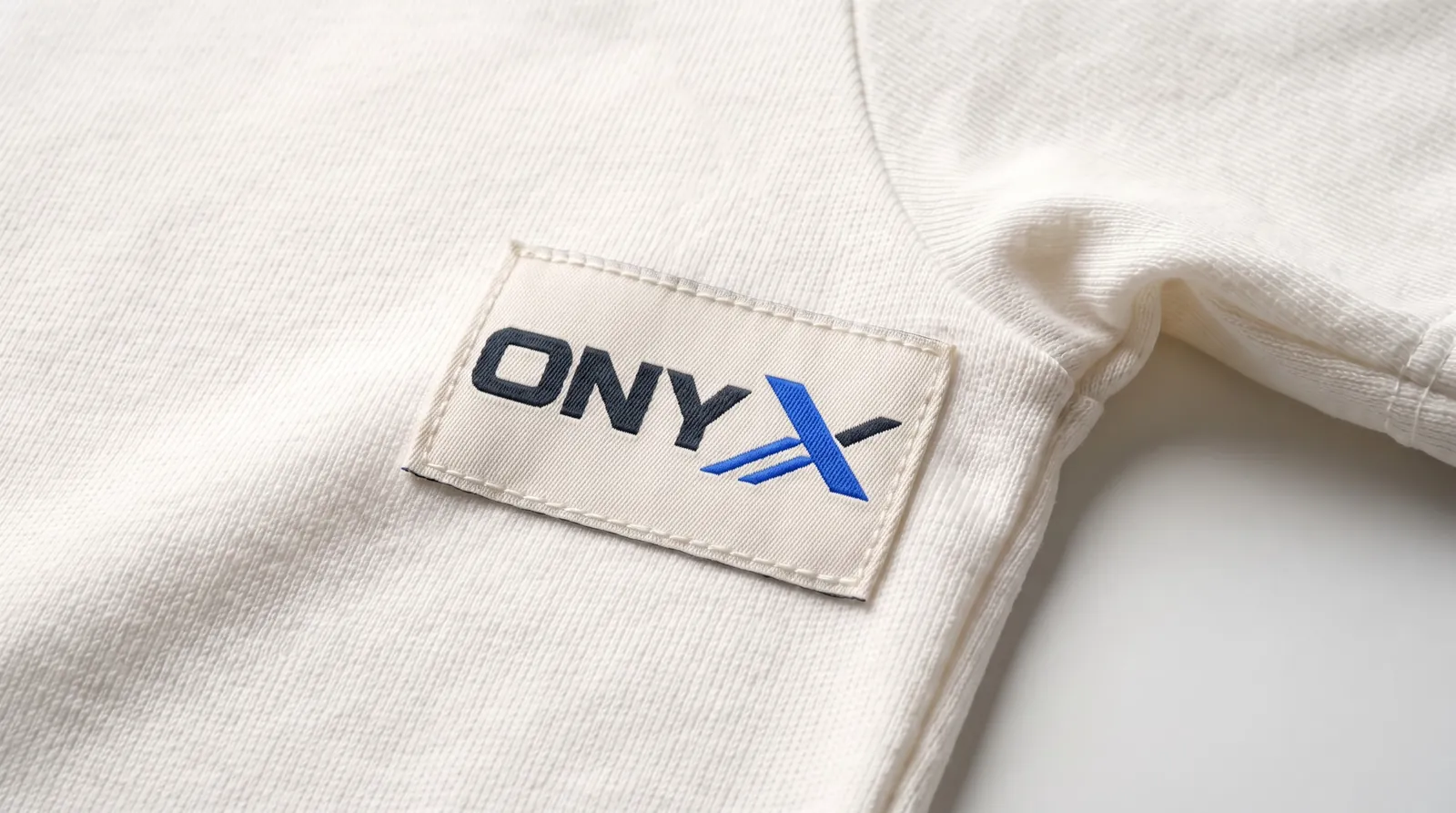 Close-up in production
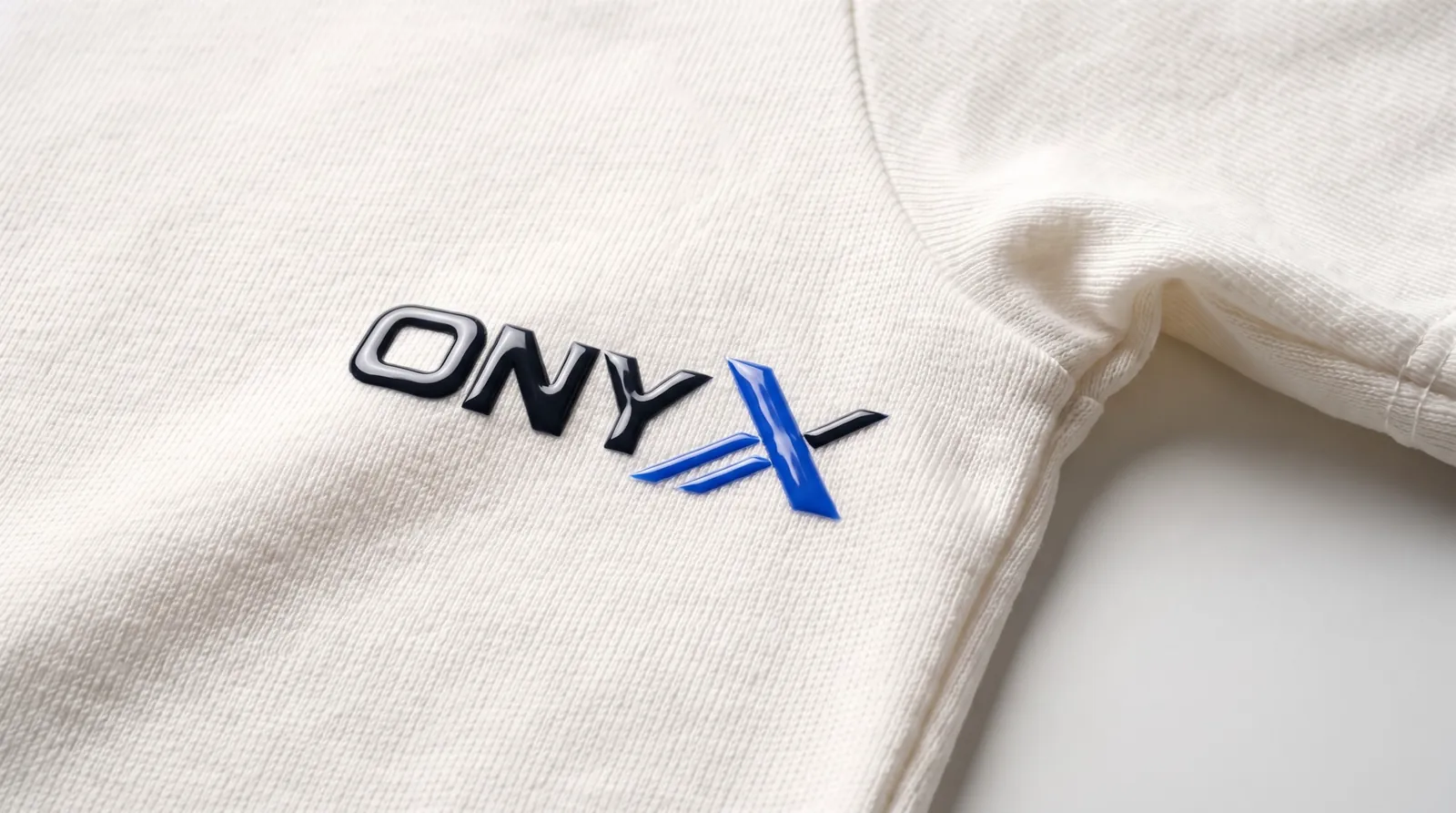 Close-up in production
Embroidery
Raised thread with a premium hand-feel. Crests, logos and badges on knits, fleece and wovens.
- Look
- Raised, textured, premium
- Best on
- Fleece, knits, polos, wovens
Often used on · Crests · fleece · polos
Sublimation
Ink dyed into polyester fibres. All-over patterns, names and numbers that never crack or peel.
- Look
- Dyed into the fibre, no hand-feel
- Best on
- White or light polyester
Often used on · Jerseys · cycling · compression
Screen print
Flat, opaque inks with crisp edges. The workhorse for tees, hoodies and merch runs.
- Look
- Flat, opaque, crisp edges
- Best on
- Cotton and blends: tees, hoodies
Often used on · Tees · hoodies · merch
Puff print
Ink that rises as it cures for a soft 3D logo. A streetwear favourite.
- Look
- Soft, raised 3D ink
- Best on
- Hoodies, sweats, heavyweight tees
Often used on · Hoodies · tees
Woven labels & patches
Your logo woven in thread: neck labels, hem tabs and sewn-on patches.
- Look
- Thread-woven, durable, flat
- Best on
- Any garment, sewn on
Often used on · Every range
Silicone transfer
Glossy raised badges heat-applied to performance fabric.
- Look
- Glossy, raised, rubbery
- Best on
- Performance and stretch fabrics
Often used on · Training · gym · cycling
Illustrative close-ups. Methods are confirmed against your material on the sample.
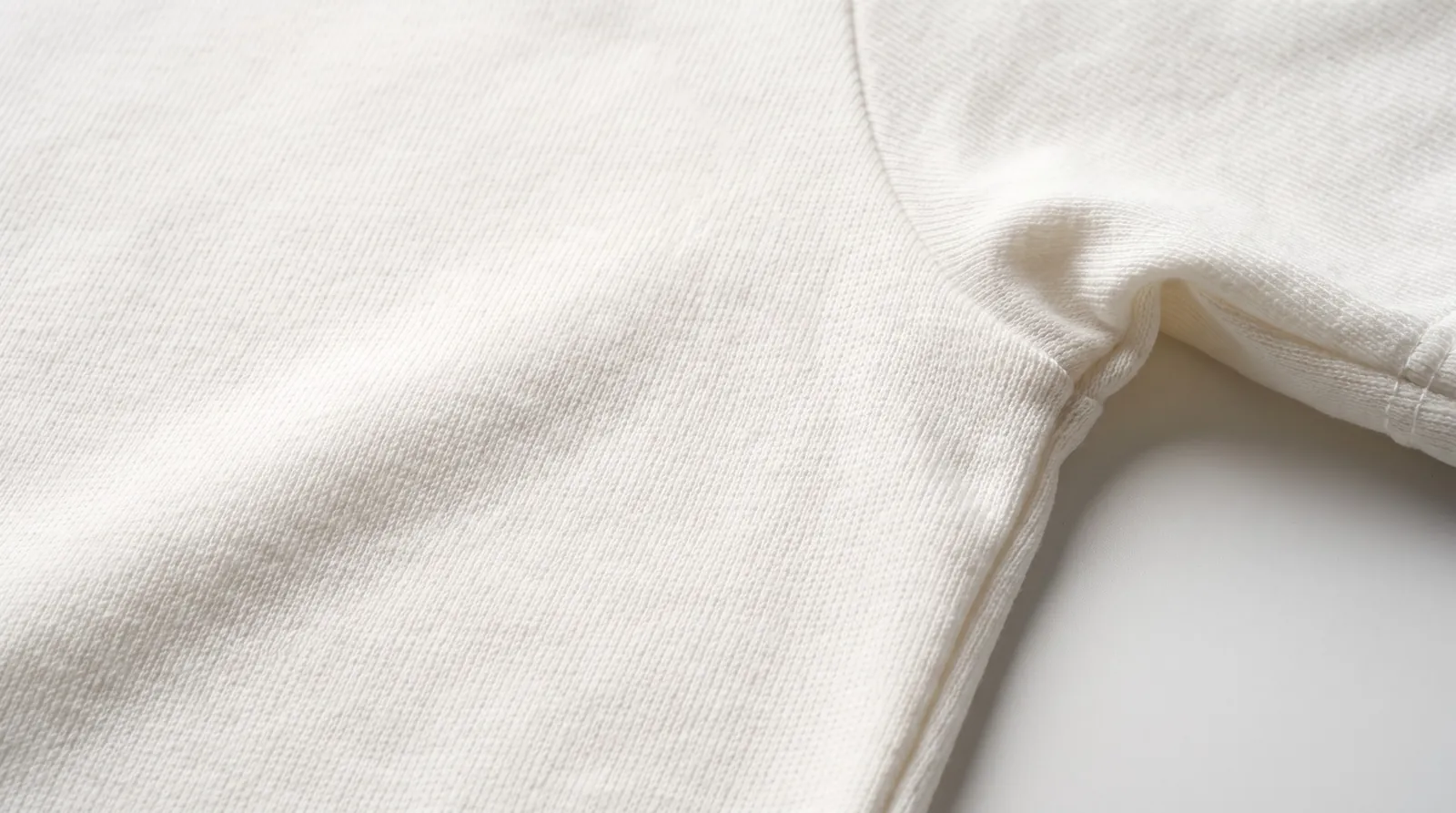 EmbroideredBlank
04Blank to branded
Same knit. Your mark.
Drag the line across the fabric. Decoration changes how a garment feels as much as how it looks — embroidery adds weight and texture, sublimation adds nothing you can feel. That is why every method is shown on your sample before the run.
- Size and position checked in centimetres
- Thread and ink colours against your references
- Hand-feel and stretch checked on the real fabric
- Wash behaviour discussed for the chosen method
05Method guide
Which method, on which fabric.
General guidance to start the conversation. The right method for your garment is confirmed against your material and artwork on the sample.
| Method | Look & feel | Best on | Artwork | Watch for |
|---|---|---|---|---|
| Embroidery | Raised, textured, premium | Fleece, knits, polos, wovens | Vector logo; thread colours as Pantone references | Stitch count rises with size; fine text under a few mm loses detail |
| Sublimation | Dyed into the fibre, no hand-feel | White or light polyester | Full-size artwork; colours proofed on fabric | Not for cotton or dark bases; best for all-over designs |
| Screen print | Flat, opaque, crisp edges | Cotton and blends: tees, hoodies | Vector with spot colours | Each colour is a screen — fewer colours, simpler set-up |
| Puff print | Soft, raised 3D ink | Hoodies, sweats, heavyweight tees | Vector; bold shapes work best | Very fine lines can close up as the ink rises |
| Woven labels | Thread-woven, durable, flat | Any garment, sewn on | Vector logo; size of the label in mm | Small text needs a high-density weave |
| Silicone transfer | Glossy, raised, rubbery | Performance and stretch fabrics | Vector; minimum line thickness checked on proof | Heat-applied: confirmed against your fabric on the sample |
06Artwork checklist
Files that print first time.
Good artwork saves a proofing round. If you only have a JPG or a sketch, send it anyway — artwork clean-up can be part of the ODM side of the project.
- Vector files: AI, EPS, PDF or SVG, fonts outlined
- Colour references as Pantone codes — or a physical swatch
- Width of each logo in centimetres, per placement
- Placement measured from a reference point (e.g. 8 cm below the collar)
- Number of colours in each logo
- Different sizes for youth and adult runs, if needed
- Names and numbers as a roster with sizes
- A mock-up or photo showing the intended look
07Labels, tags & packaging
The details that say it’s yours.
The finishing layer of a private-label garment. Each item is specified in your brief, made with the sample and checked with the run.
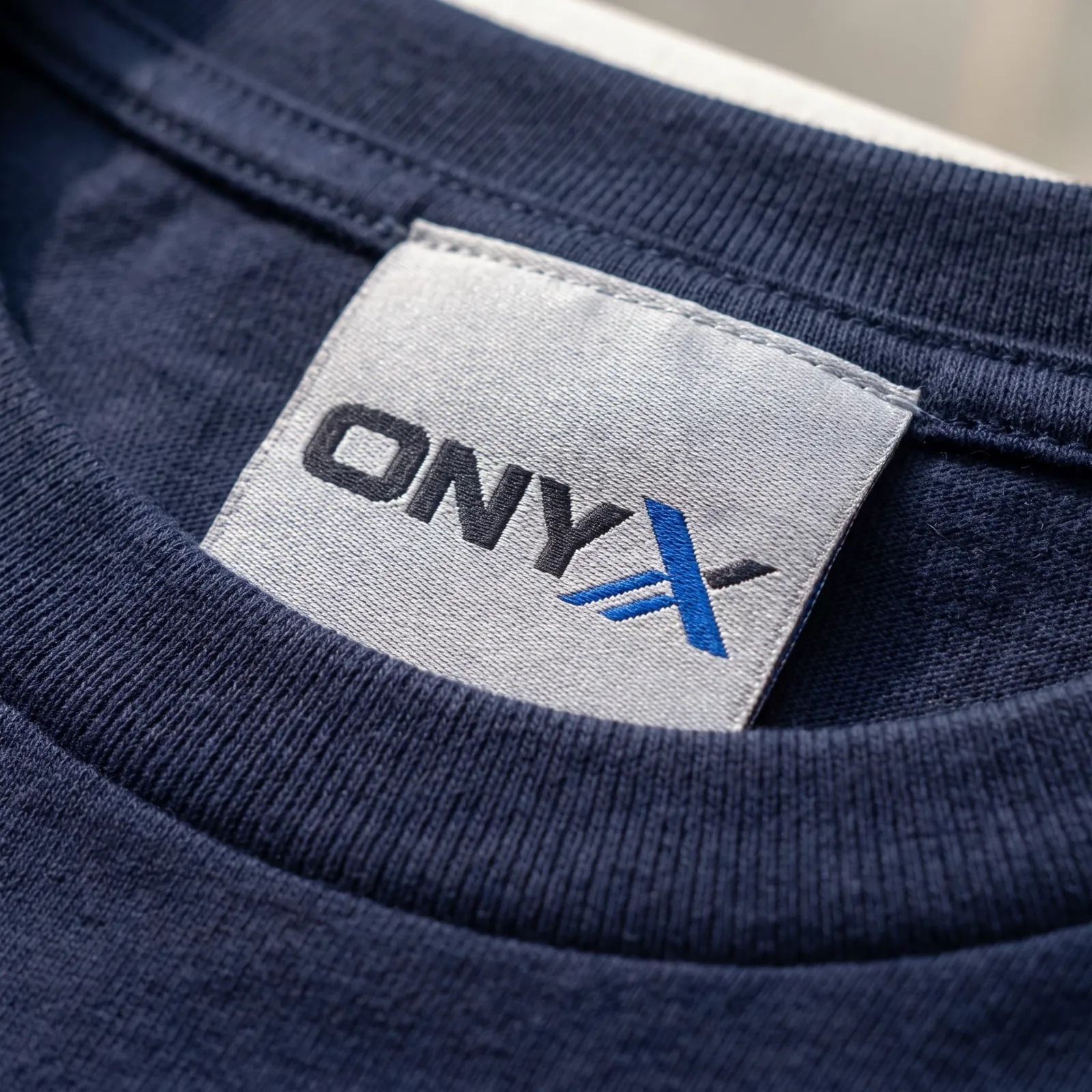
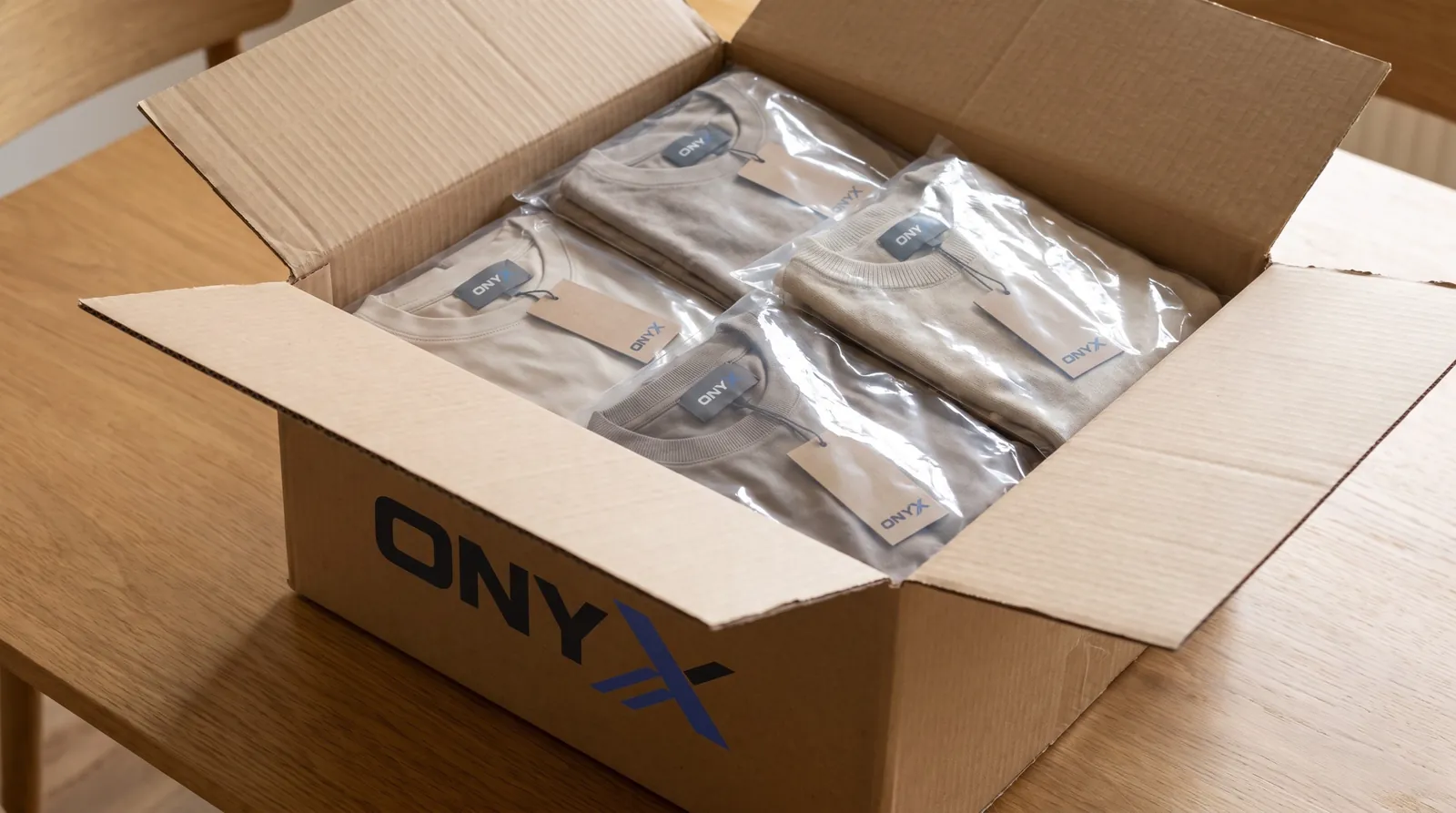
- Neck labelsWoven, printed or tagless heat-transfer
- Care & contentCare symbols and fibre content for your market
- Size labelsSize tabs and loop labels
- Hem tabs & flagsSmall woven tabs on hems and seams
- Swing tagsCard tags with your branding and barcode
- PolybagsClear or printed, with warning text if needed
- Carton marksOuter carton marks to your packing brief
- InsertsCards, tissue and stickers
08Before you enquire
Customization FAQ.
Straight answers. Anything commercial — minimums, timing, prices — is set per style and confirmed in your quote.
Which decoration method is best for my logo?
It depends on the fabric, the artwork and the look. Embroidery suits fleece and polos, sublimation suits polyester jerseys, screen and puff suit cotton streetwear, silicone suits performance fabric. We suggest a method and confirm it against your material on the sample.
What size should my chest logo be?
Left-chest logos commonly sit around 7–10 cm wide, centre-chest prints around 20–28 cm and full-back prints up to about 30 cm. These are starting points only; the right size depends on the garment size run and your artwork, and is confirmed on the sample.
What artwork files do you need?
Vector files (AI, EPS, PDF or SVG) with fonts outlined, colour references as Pantone codes, and a placement note with the width in centimetres. High-resolution PNGs are fine as references.
Can you match my brand colours?
Colours are matched to your Pantone references or physical swatches and shown on the sample for approval. Thread, ink and dye on fabric can differ from screens, so the approved sample is the reference.
Can each size have a different print size?
Yes. Prints can be graded so a youth XS and an adult 3XL both look right; give the sizes in your spec or ask us to propose a grading.
Do you make custom woven labels and swing tags?
Yes. Woven and printed neck labels, care labels, hem tabs, swing tags and branded polybags can be made in your branding. List each one in your brief.
Can I combine several methods on one garment?
Yes — for example an embroidered chest logo with a screen-printed back and a woven hem tab. Each method is shown on the sample.
Is decoration included in the price?
Decoration is quoted per style with the garment, based on method, size, colours and placements. Your quote lists each one.
09Your brief
Place your logo. Send the brief.
Tell us what you are making. A tech pack, a reference photo or a sketch on a napkin all work. We reply with questions, the route that fits (OEM or ODM), sampling steps and a quote.
→Plan the next step
More on how we work
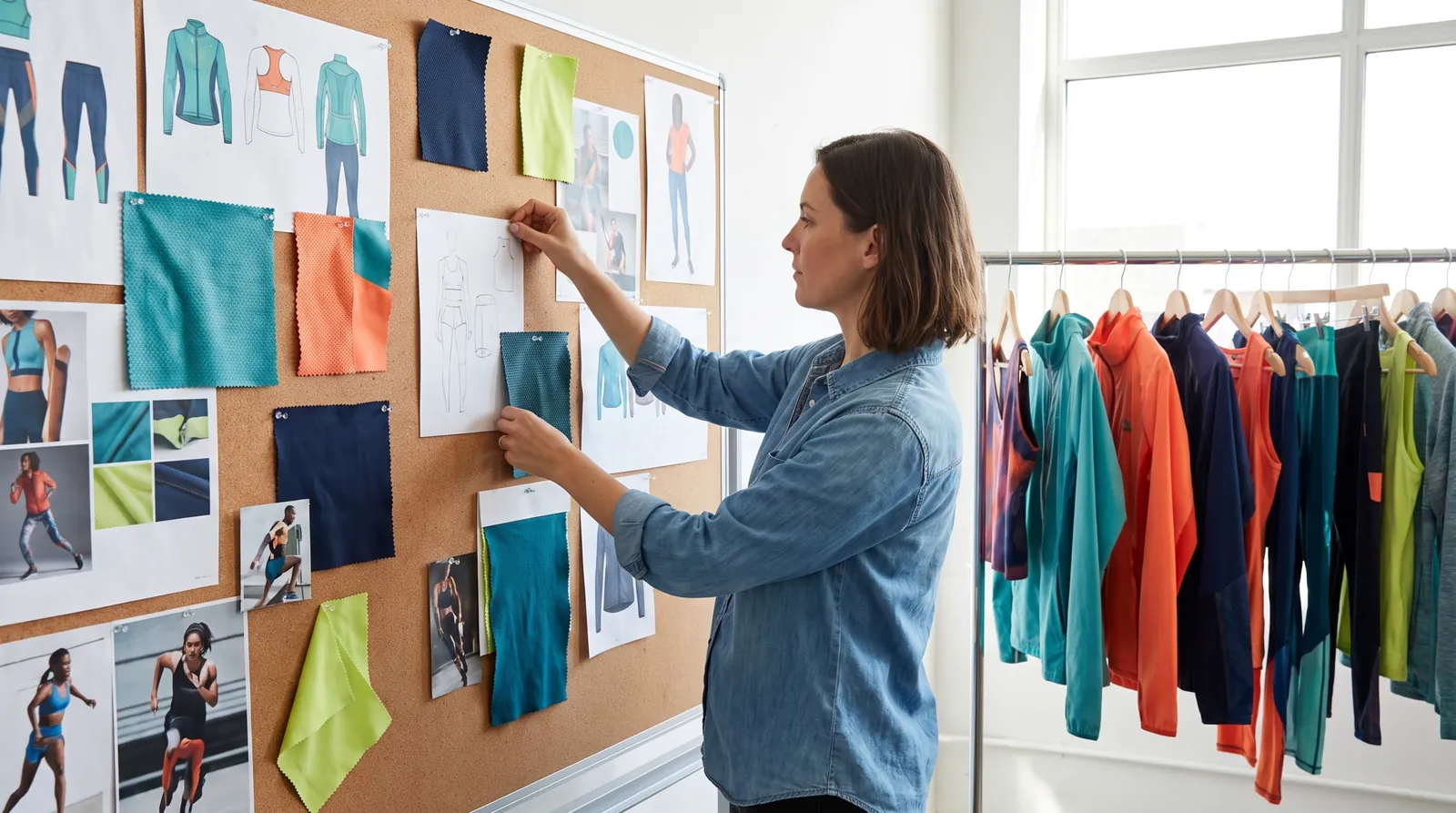
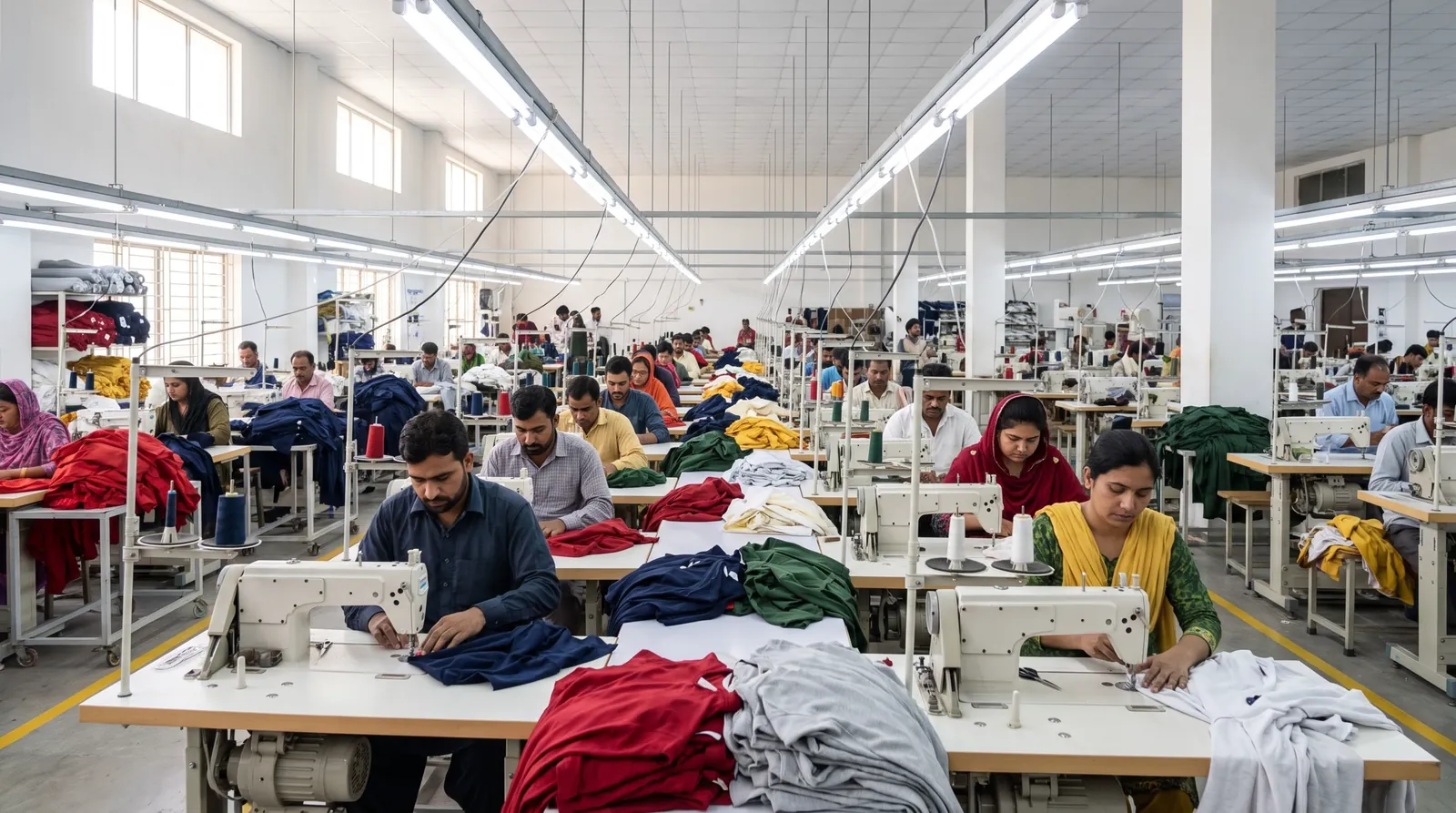
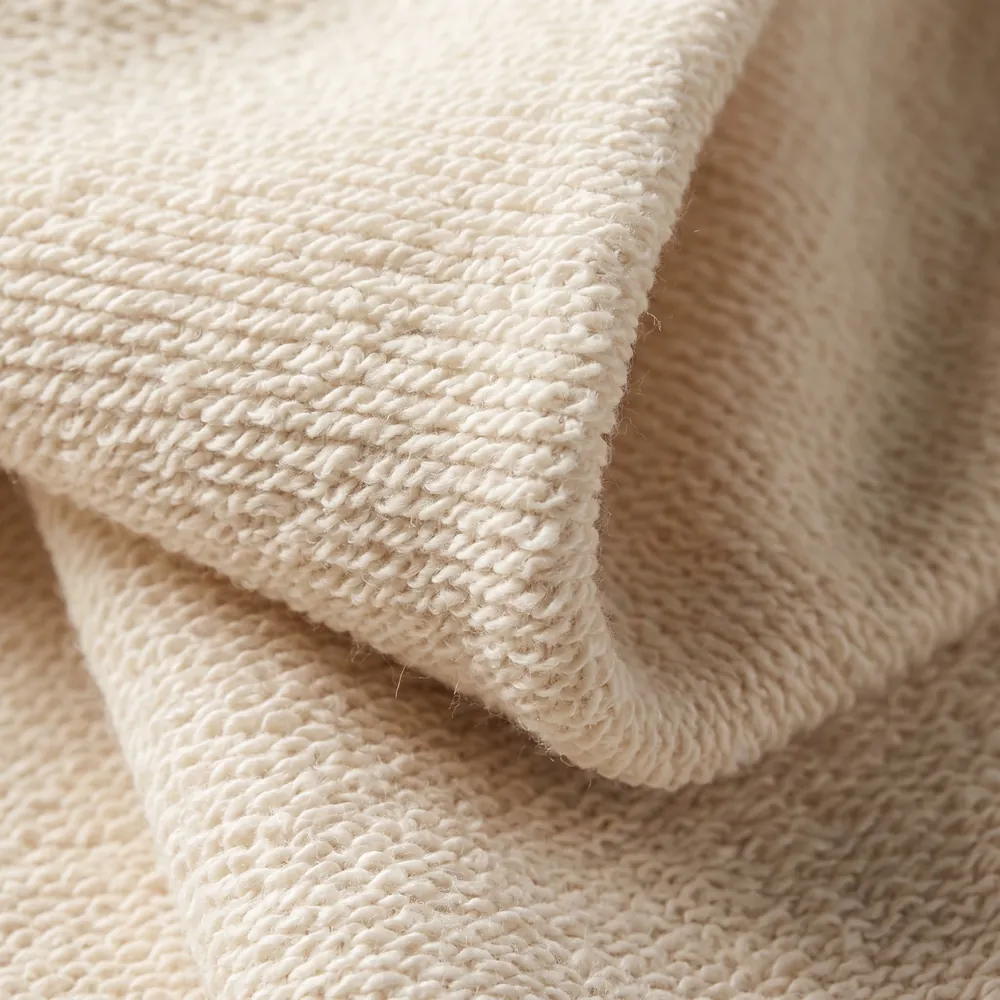
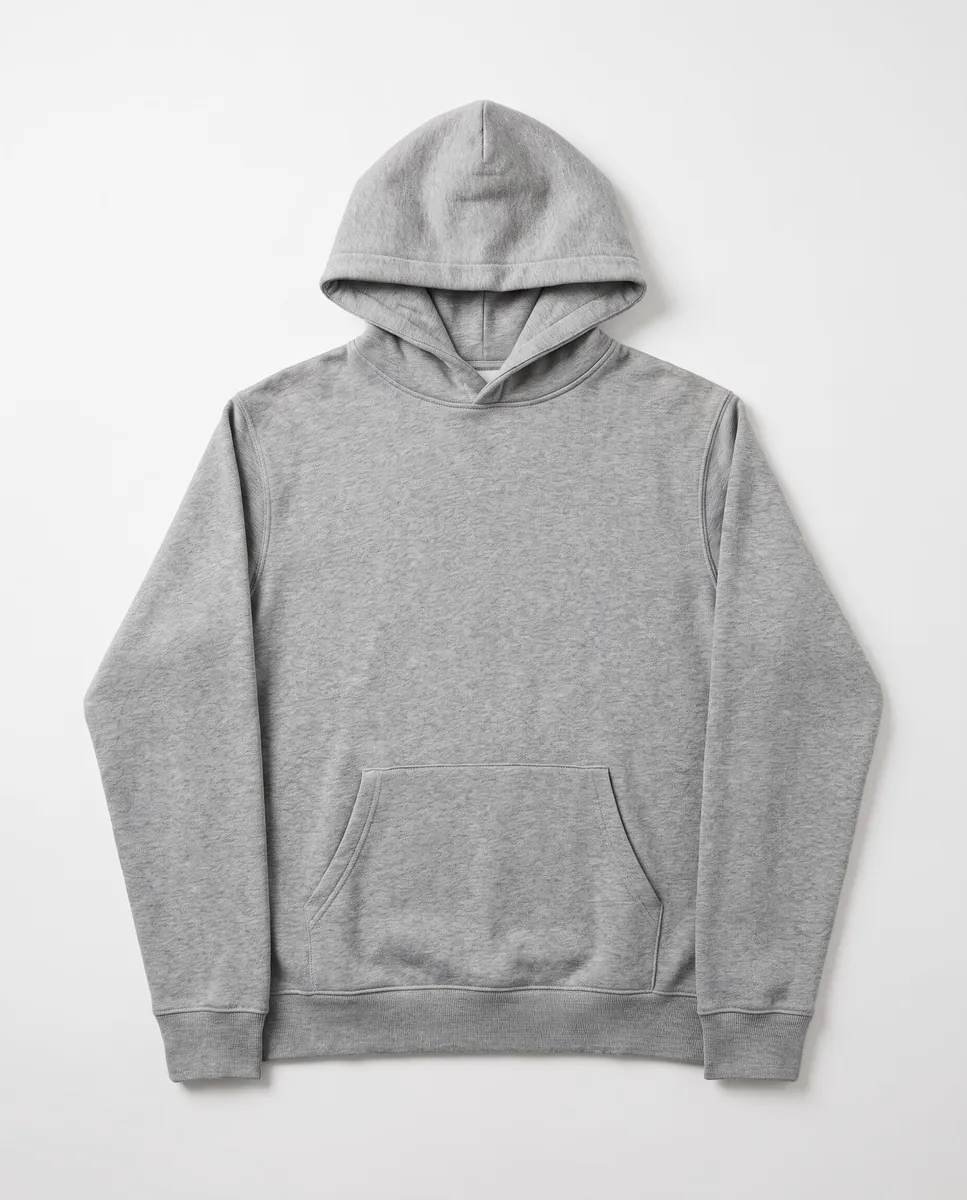
Your mark, placed right.
Send your logo files and placements. We reply with method suggestions, a sampling plan and a quote for your run.